Our picks

The parts we choose,
and why.

Every part on this page is one we fit on our own sites. Our best option for most projects is a Huawei inverter with LONGi back-contact panels, protected by ABB, CHINT and SUNTREE switchgear and wired in copper from Yazaki and LINK. Below is the reason behind each choice, and the alternatives we trust.

Looking for prices? Members can download the price list. Not a member yet? Ask through a consultation.

Inverters

Huawei first, with five alternatives we trust

The right brand depends on the site: roof shading, phase balance, battery plans and budget.

The inverter is the heart of a solar system.

It turns the DC power from the panels into the AC power your home or business uses, decides when to charge the battery or draw from the grid, and shuts the system down safely when something is wrong. It is also the part most likely to need attention over 20 years, so we choose on service first and price second.

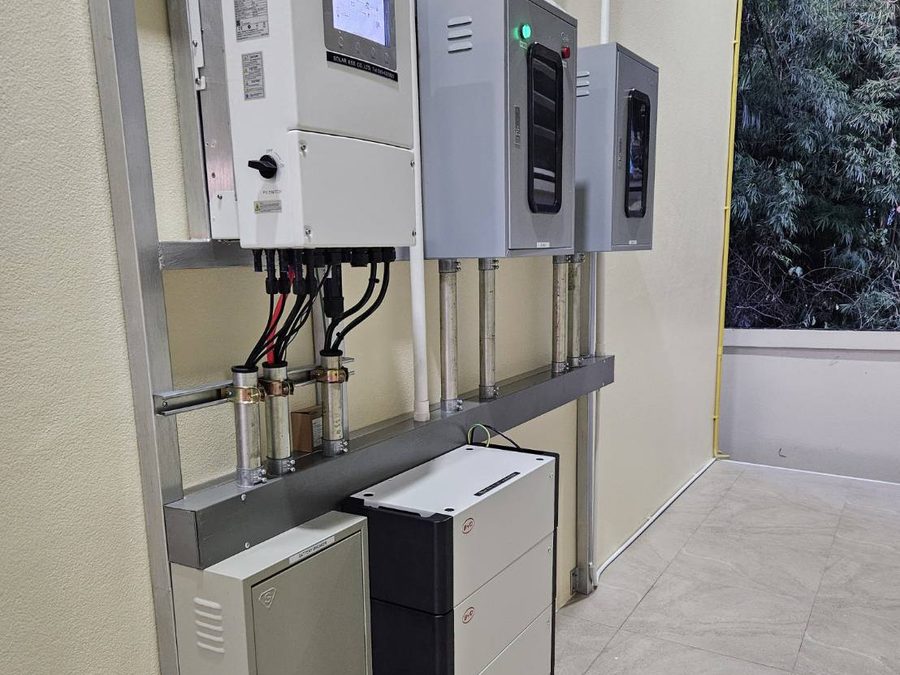
Hybrid inverter with stacked battery, mounted on a steel frame at a Solar ESS site
Hybrid inverter with battery
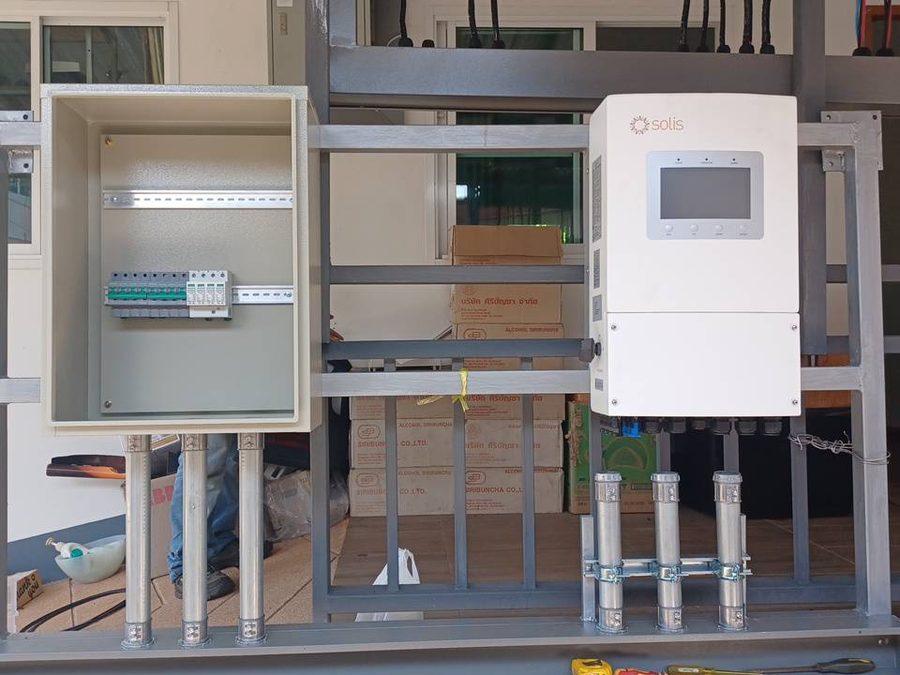
Inverter and AC/DC combiner box on a steel mounting frame with conduit
Inverter and AC/DC combiner box
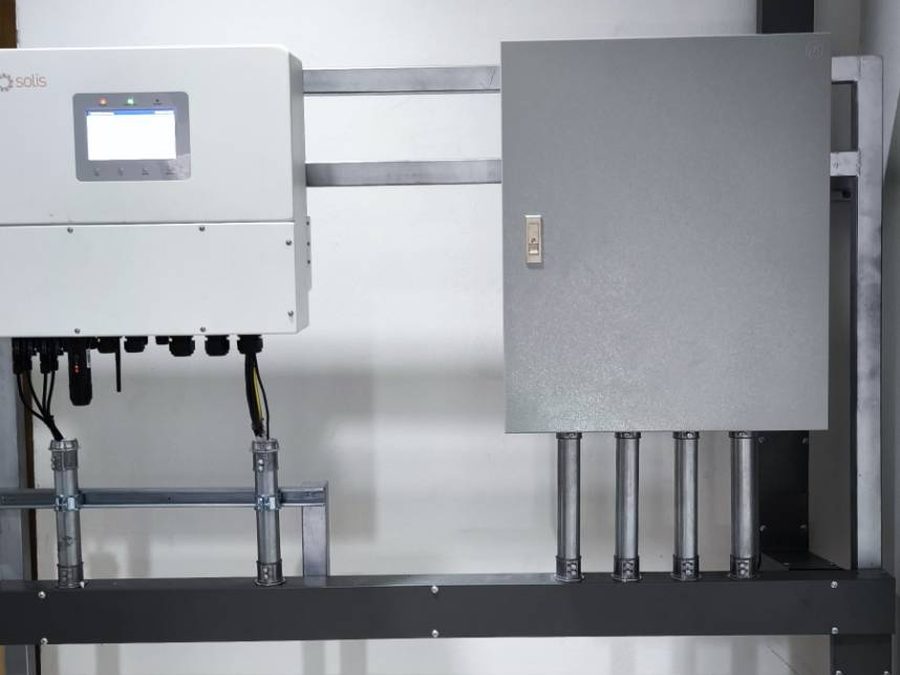
Inverter and distribution box installed indoors above a wireway
Indoor installation over a wireway

Our first choice · 5 kW to 100 kW

Huawei

Huawei is the inverter on most of our sites. What we love most is the service system behind it. We can submit a ticket directly to Huawei, no matter where your installer or supplier is, and you are treated as Huawei's own customer.

If a unit has to be claimed, Huawei delivers the replacement to your door and collects the faulty one for investigation.

Shaded and complex roofs

SolarEdge

We love the optimizers, which let every panel work at its own best, and the long warranty. The monitoring app is excellent.

Homes with uneven loads

Solis

We love how it supports an unbalanced system at home, where the three phases carry different loads, and its practical remote app.

Microinverter

ATMOCE

We love its safety and durability. Each panel has its own small inverter, so there is no high-voltage DC cable running across the roof.

Microinverter

Enphase

A long-term warranty and a worry-free option for owners who want to fit it and forget it.

Energy management

Deye

Once the brand we loved most, and still one of the most comprehensive for energy management. Its one weak point, in our experience, is the support system for claims and inverter repairs.

Ask for a price

Solar panels

Back-contact panels from LONGi and AIKO

The newest step in a long line of improvements. Here is how panels got to this point.

Each generation of solar panel has turned a little more of the same sunlight into electricity.

  1. Amorphous and thin filmA thin layer of silicon or another material laid on glass or a flexible sheet. Cheap and light, and familiar from pocket calculators, but low in output, so a roof needed a large area for little power.
  2. MonocrystallineCells cut from a single silicon crystal. More power from the same area and a longer life, which made mono the standard for rooftops.
  3. PERCA reflective layer added to the back of the cell sends unused light back through the silicon for a second chance at being absorbed.
  4. BifacialGlass on both sides, so the panel also collects light reflected from the ground or roof onto its back.
  5. Back contact (HPBC and ABC)All the metal wiring moves to the back of the cell. Nothing on the front blocks the light, and the whole face of the cell works.

Our standard panel

LONGi HPBC

HPBC stands for Hybrid Passivated Back Contact, the technology in LONGi's Hi-MO X10 range. With no busbars on the front, more light reaches the cell and the panel has a clean, all-black face.

It gives high output per panel, so the same system needs fewer panels, fewer roof fixings and less cable. It also copes better when part of a panel is shaded by a tree, a pole or a neighbouring roof.

Also installed

AIKO ABC

ABC stands for All Back Contact, used in AIKO's Neostar range. Both the positive and negative contacts sit on the back of the cell, leaving the front completely clear.

It is among the most efficient panels available for rooftops, and handles partial shading well, which suits small or awkward roofs where every square metre counts.

Ask for a price

Breakers

ABB, SUNTREE and CHINT

Sized to the cable and the inverter on every circuit, DC and AC.

A breaker is cheap until the day it has to work. This is the wrong place to save money.

What we fit

AC breakers
ABB, SUNTREE, CHINT
DC breakers
SUNTREE

Why we pick it

  • Each breaker is matched to the cable it protects, so the breaker trips before the cable overheats.
  • DC circuits get breakers rated for DC. An AC breaker on a DC string cannot be relied on to break the current.
  • Labelled and laid out in the box so the next electrician can see what each one does.
Ask for a price

Surge protection (SPD)

SUNTREE surge protection on both the DC and AC sides

Fitted in the DC and AC boxes, with a proper earth.

An inverter is electronics. Surge protection costs a small fraction of the inverter it saves.

What we fit

SPD
SUNTREE, DC and AC

Why we pick it

  • Thai storm seasons bring lightning surges down both the roof cables and the grid line. Protecting one side only leaves the inverter exposed.
  • Installed close to the equipment with a short, direct earth connection, which is what makes the device effective.
  • Checked at every maintenance visit.
Ask for a price

Automatic transfer switch (ATS)

An ATS rated for the full load, chosen per project

Used where a site has backup power, a generator or more than one supply.

The ATS is a safety device as much as a convenience. We size it to the site, not to a price list.

Why we pick it

  • Switches the load between sources by itself, so the lights come back without anyone going to the board.
  • Breaks one source before making the other, so solar or generator power can never feed back into the grid line.
  • Rated for the full current of the circuits it carries, with margin, not for the average load.
  • Laid out with a manual bypass so the site can still be run by hand during service.
Ask for a price

Cable and fuses

Yazaki copper on the AC side, solar-rated cable on the DC side

Copper throughout, sized to keep losses low.

Cable is hidden once the job is finished, which is exactly why it is the first place cheap installations cut.

What we fit

AC cable
Yazaki, copper
DC cable
LINK, Phelps Dodge, HELUKABEL
DC fuses
SUNTREE

Why we pick it

  • Solar-rated DC cable is double insulated and built for years of sun, heat and rain on a roof.
  • We size cable by the length of the run, not by the minimum that will pass, so less of your solar power is lost as heat.
  • Fuses on the DC strings protect the cable and panels if one string develops a fault.
  • Run in conduit and wireway, clipped and labelled, with nothing left loose on the roof.
Ask for a price

Enclosures

KJL steel boxes

For the AC and DC combiner boxes beside the inverter.

The box keeps water, dust and hands away from live parts for the life of the system.

What we fit

Enclosure
KJL, steel

Why we pick it

  • Steel stands up to heat and knocks better than plastic, and gives a solid earth point.
  • Sized with room inside, so breakers and surge protection run cool and can be serviced.
Ask for a price

Test instruments

Hioki and Fluke

What we measure with matters as much as what we install.

Every system is tested before handover and at each maintenance visit.

What we fit

Instruments
Hioki, Fluke

Why we pick it

  • Insulation, earth and string measurements are recorded at commissioning, so later readings have something to be compared against.
  • Thermal checks on boxes and connections find a loose terminal before it becomes a fault.
Ask for a price

Supply

Buy the same materials from us.

Installers and owners can order any of these parts through Solar ESS, with advice on sizing included. We do not publish prices here. Members can download our current price list with their password. Not a member yet? Book a consultation and ask for one.

Member price list

kris@solar-ess.org
063 151 6694 · 089 429 6832

Solar ESS Co. Ltd. · Solar Energy for Sustainable SolutionMembers · www.solar-ess.org · www.solaress.org